
How We Assess Soil Infiltration - and Why It Matters for Your Project
September 21, 2026


How We Assess Soil Infiltration - and Why It Matters for Your Project
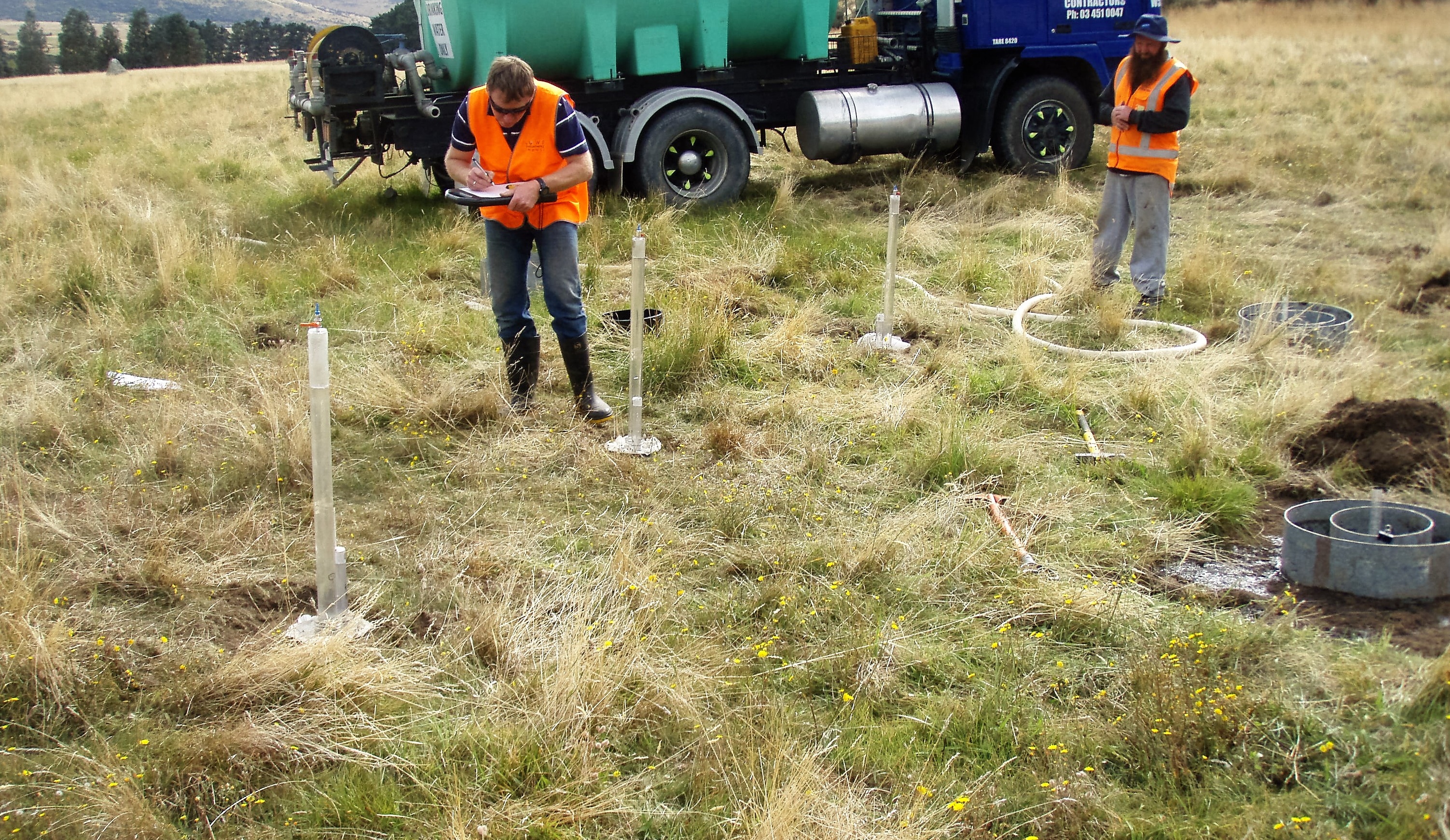
Understanding how water moves through soil is essential for designing reliable land‑based treatment and discharge systems. To get the most accurate picture, we use two proven field tools: plate permeameters and double‑ring infiltrometers.
🧪 Plate Permeameters – How soils behave under everyday conditions
Plate permeameters help us measure how water moves through soil when it isn’t saturated. This matters because most land application systems operate under these every day, unsaturated conditions. These tests show how the soil will perform day-to-day once your system is running.
This helps us determine:
- How quickly water will move through the soil during normal loading
- Whether the soil structure and texture support consistent infiltration
- How the system will perform over the long term, not just during peak events.
🫗 Double‑Ring Infiltrometer – How soils behave when fully saturated
Double‑rings measure the maximum infiltration rate of the soil. This helps us understand how the system will respond in heavy rainfall, high‑loading events, or any situation where water might temporarily pool or saturate the ground.This is crucial for:
- Avoiding surface ponding
- Managing stormwater or high-volume loading
- Ensuring the system meets regulatory performance requirements
📈 Why we use both
By combining the two methods, we get a complete understanding of the soil’s capability:
- How it handles normal day‑to‑day loading
- How it performs under stress or peak flows
- How best to size and design systems to avoid issues like ponding or failures
Investing in high-quality field measurements means better design confidence, fewer surprises, and a system tailored to your site that works with the soil, not against it.