
Soils in Winter: Managing Water, Risk & Consent Confidence
September 21, 2026


Drainage Limits and Defensible Decisions
Winter can reveal how water and soils interact under stress.
A site that performs well through summer can behave very differently once soils become wet. As available storage capacity reduces, drainage pathways become more active, and the consequences of disturbing the soil increase significantly.
For wastewater irrigation, earthworks, and land development,winter is often when the key questions arise:
- How much water can the soil actually accept?
- Where will excess water move?
- What happens when drainage is restricted?
- Can the proposed management approach still perform under wet conditions?
Understanding soil drainage is particularly important. Features such as slowly permeable layers, compacted horizons, pans, rock, or shallow groundwater can restrict downward movement of water, leading to lateral flow, ponding, runoff, and increased nutrient movement.
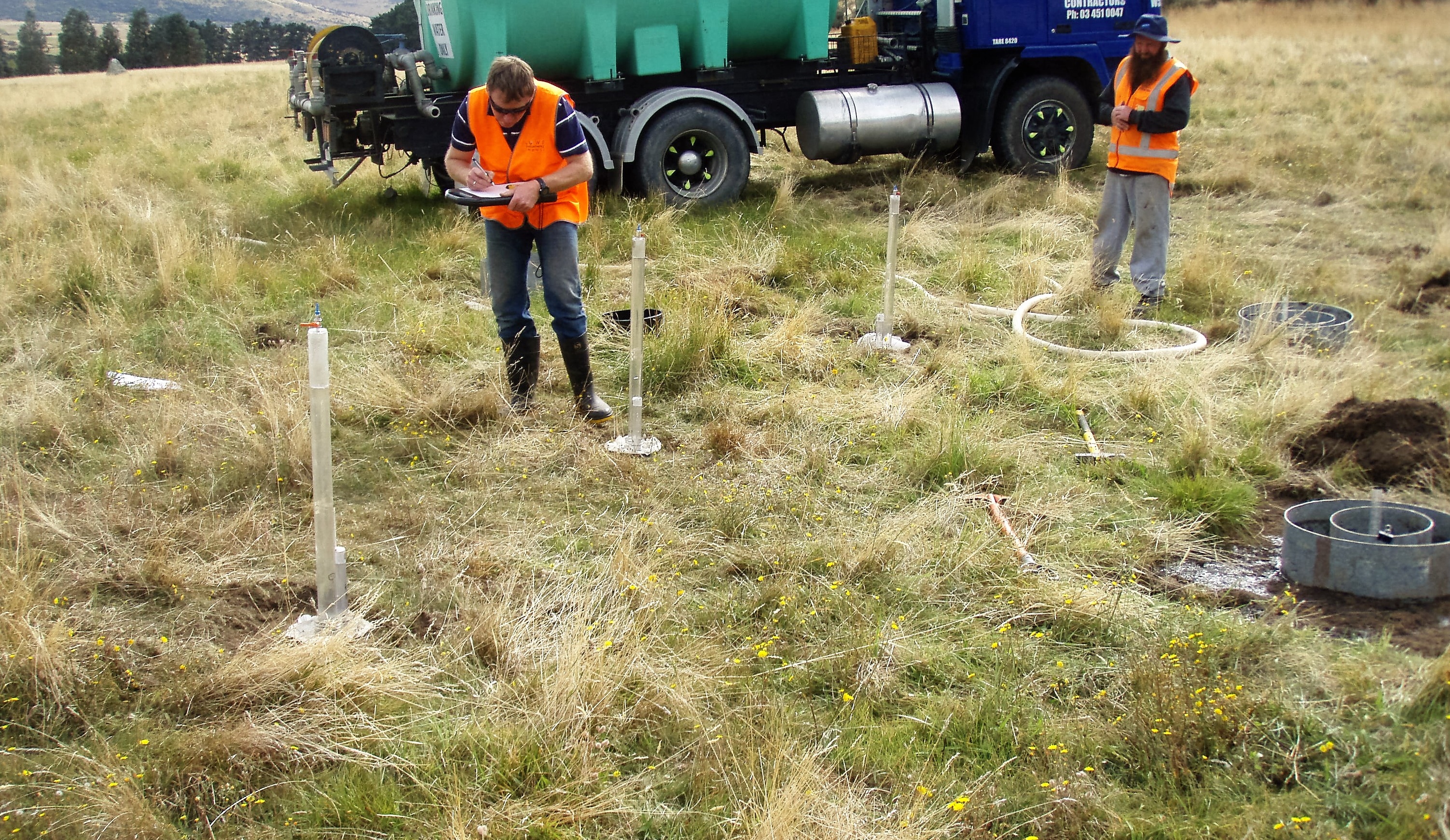
This is where targeted soil testing can help. Saturated and unsaturated hydraulic testing provides insight into how soils behave when they're wet, how quickly water moves through them, and whether a more conservative irrigation rate may be needed. The results can help guide design rates, but they are only part of the picture. Site conditions, soil variability, slope, groundwater risk, and the consequences of surface emergence all need to be considered when determining an appropriate loading rate.
The best winter management strategies don't rely on annualaverages or calendar dates alone. They focus on actual soil condition and howwater moves through the landscape at its wettest.
In practice, that means:
- Designing systems around prolonged wet soil lmitations, not summer performance
- Understanding drainage constraints before they become operational problems
- Matching loading rates to site conditions - soils and slopes
- Protecting soil structure and infiltration capacity
- Building management frameworks that remain effective during prolonged wet periods
When winter behaviour is understood, decisions on irrigation limits, land disturbance, nutrient loading, and site suitability become far more robust. And when those decisions are supported by good soil information, they are far easier to defend through consenting and ongoing operations.
The real test of a land treatment system isn't how it performs in ideal conditions; because if it only works in summer, you are going to need a backup plan.
What Actually Drives the Risk?
First, soils have less capacity to absorb anything new.
As soils become wetter, available storage is reduced. It takes less rainfall, irrigation, or wastewater loading to trigger drainage because much of the buffering capacity has already been used.
Second, water starts moving differently.
Drainage rates increase, reducing the time for biological activity to treat water within the soil profile. Water can move more rapidly through the system, downward through drainage pathways or laterally across the landscape. When water moves, nutrients often can move with it. While Drainage is expected, understanding where it goes is important.
Third, disturbance matters more.
A paddock that performs well in summer can quickly lose structure in winter. Traffic, cultivation, or earthworks can reduce infiltration and increase runoff, ponding, and erosion.
Together, these factors create a system with:
- Less Buffering
- More Movement
- Higher Consequences
That's why winter soil behaviour and testing to simulate winter saturation conditions drives so many practical decisions, from loading limits and irrigation management to land disturbance controls and consent outcomes.
Saturated hydraulic conductivity testing helps identify the upper limit of movement when the profile is wet. Unsaturated testing helps show how the soil performs under more typical operating conditions, before full saturation occurs. Using both gives a better picture of storage, drainage, and treatment capacity across the site.
For practical design, the point is not to apply the measured hydraulic rate directly. Saturated and unsaturated testing data should be interpreted alongside field observations and then translated into a suitable design irrigation rate that reflects site risk, slope, groundwater conditions, soil variability, system controls, and any evidence of surface emergence.
Most problem sites don't have "bad" soils. More often, the soil hydraulic behaviour simply wasn't fully understood at the outset. Because in wet conditions with low temperatures and evaporation, it's not the average condition that matters. It's how the soil performs when it's wet, stressed, and has the least capacity to absorb nutrients.
Protecting Your Soils (and your consent position)
You can’t change what soils do in winter.
But you can work with them, or against them.
The biggest shift is moving away from calendar-based thinking. Just because it’s technically “outside winter” doesn’t mean the soil is in a good state, and the opposite is just as true. What matters is today’s soil condition. From there, it becomes about care and timing.
Protecting soil structure is a big one. Once it’s damaged by traffic or stock on wet ground, everything else degrades with it , drainage, treatment, and overall performance. And recovery isn’t quick. Application rates and methods matter too. In winter, smaller and more controlled inputs make a real difference. The aim is to keep water in the soil profile long enough to be treated, not pushing it through the system too fast.
And then there’s knowing your site. Most areas have spots that behave differently in winter; lower ground, wetter zones, places that pond. Recognising those areas (and sometimes just avoiding them) is often the simplest risk reduction there is. It also means checking for seasonal high groundwater, sloping soils, seepage lines, and any evidence of surface emergence.
Those wetter areas should not always be treated as failures. In some cases, they provide important information for design. Persistent wetness, seasonal high groundwater, or surface emergence may point to locations where loading should be avoided, reduced, or redirected. They may also support treatment or polishing features such as constructed wetlands, provided the site setting and consent conditions allow it.
Good winter management isn’t just good practice — it’s defensible.
It shows:
- You understand how the system actually behaves
- You’re managing risk at the right time (when it matters most)
- Your design isn’t relying on best-case conditions
Which is exactly what regulators are increasingly focused on.